Below is a map of places we have been on Fyn. The orange lines are bike routes we have taken, and the icons are points of interest. Clicking on an icon will bring more information. I will continue to update the map as I we go to new places. A link to it will be in the margin to the right.
Thursday, September 11, 2008

Wednesday, September 10, 2008
Ravnholt
I decided Tuesday was castle day, so I saddled up and headed south towards a place called Ravnholt.
To get there I had to re-ride the dreaded Svendborg route (55) thru suburban hell, but as it was a sunny day, this was acceptable. I even noticed some things along the way that I had not noticed before. So the ride down to Ringe (a big town west of the castle) was pleasant enough. When I turned toward Ravnholt, I soon knew I was headed toward someplace with history and money on its side.
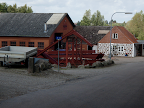
All around the estate, the roads leading to it are lined with old trees on both side creating a sort of tunnel to the estate. On either side one can see forests and fields without houses, which is a unique sight in Denmark. The estate is still a functioning farm, really. They have huge support buildings where they process the grain from the fields.
After lunching at the gates of the castle, I headed north toward home, through an area known for its man-made lakes. This strange landscape consists of lakes created during gravel and sand mining operations. The Danish twist is that they reclaim the area after mining and turn them into wildlife habitat and recreation area. Stranger still these areas are heavily advertised in the tourist literature.
 |
| From Ravnholt |
To get there I had to re-ride the dreaded Svendborg route (55) thru suburban hell, but as it was a sunny day, this was acceptable. I even noticed some things along the way that I had not noticed before. So the ride down to Ringe (a big town west of the castle) was pleasant enough. When I turned toward Ravnholt, I soon knew I was headed toward someplace with history and money on its side.
All around the estate, the roads leading to it are lined with old trees on both side creating a sort of tunnel to the estate. On either side one can see forests and fields without houses, which is a unique sight in Denmark. The estate is still a functioning farm, really. They have huge support buildings where they process the grain from the fields.
After lunching at the gates of the castle, I headed north toward home, through an area known for its man-made lakes. This strange landscape consists of lakes created during gravel and sand mining operations. The Danish twist is that they reclaim the area after mining and turn them into wildlife habitat and recreation area. Stranger still these areas are heavily advertised in the tourist literature.
Monday, September 8, 2008
Lubeck
On the evening of Monday September first, we arrived in Lubeck, and found our hotel (Hotel Excelsior; located just outside the Main gate to old-town Lubeck). Lubeck is an old Hanseatic town, and has been referred to as the Queen City of the Hanseatic League. It is now a World Heritage site (the downtown area) and is a really lovely place to visit.
On our trip to the Netherlands in May we learned a fair amount about the Hansa as many of our port calls were Hansa cities. We also received a lecture from a Dutch professor about the Hansa. We immediately recognized the imprint this league had on this town when we saw the Holstentor (the main gate). Gates such as this one dating back to the 13th century can be found in numerous cities in the Nethderlands, and also, I would guess, in other Hansa ports around northern Europe.
Also immediately apparent was the Hansa-esque architecture seen all over the city. These buildings, especially along the water are old warehouses that have been long since converted into housing and retail space.
Other great things about Lubeck: The churches, which include a couple of cathedrals. One such cathedral, St. Mariens, has preserved the old bells damaged during WWII as a peace memorial. Another, the Dom Kirke, had a huge Gothic addition made to the Romanesque maine hall during the 16th century at the behest of a bishop. It is an amazing contrast between the two styles. Light and airy (gothic) vs heavy and strong (romanesque).
There is an old hospital dating to 1260 that was run by nuns. There are numerous old alleys where additional housing was made inside the courtyards of other houses during housing shortages. There are many museums, and walking streets too. Lubeck is known for its Marzipan (blech, but to each her\his own). There is an old city hall and market square, but it is less impressive than some of the other parts of town. And finally there is the old wharf area sitting on the river Trave, which is lovely.
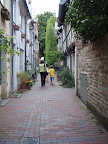
The kids walked around this place for an entire day. They never get tired of the big cathedrals (well, not yet), and they always lead us to interesting bits we would otherwise overlook. An example is the playground we found at the end of one of the Lubeck alleys.
 |
| From Lubeck |
On our trip to the Netherlands in May we learned a fair amount about the Hansa as many of our port calls were Hansa cities. We also received a lecture from a Dutch professor about the Hansa. We immediately recognized the imprint this league had on this town when we saw the Holstentor (the main gate). Gates such as this one dating back to the 13th century can be found in numerous cities in the Nethderlands, and also, I would guess, in other Hansa ports around northern Europe.
Also immediately apparent was the Hansa-esque architecture seen all over the city. These buildings, especially along the water are old warehouses that have been long since converted into housing and retail space.
Other great things about Lubeck: The churches, which include a couple of cathedrals. One such cathedral, St. Mariens, has preserved the old bells damaged during WWII as a peace memorial. Another, the Dom Kirke, had a huge Gothic addition made to the Romanesque maine hall during the 16th century at the behest of a bishop. It is an amazing contrast between the two styles. Light and airy (gothic) vs heavy and strong (romanesque).
There is an old hospital dating to 1260 that was run by nuns. There are numerous old alleys where additional housing was made inside the courtyards of other houses during housing shortages. There are many museums, and walking streets too. Lubeck is known for its Marzipan (blech, but to each her\his own). There is an old city hall and market square, but it is less impressive than some of the other parts of town. And finally there is the old wharf area sitting on the river Trave, which is lovely.
The kids walked around this place for an entire day. They never get tired of the big cathedrals (well, not yet), and they always lead us to interesting bits we would otherwise overlook. An example is the playground we found at the end of one of the Lubeck alleys.
Sunday, September 7, 2008
Frankfurt/Schellbach/Celle
So, exactly one week ago we met Bev as se came off her plane in Frankfurt after a week at a conference in Hawaii. That went well, and she even got to see Ann and Bill on the way through San Francisco. We did survive the Autobahn, but I will always remember the 100 km south of Hamburg that forever changed my view of highway driving. Shudder...
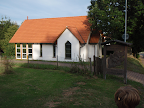
I more or less at random chose a hotel (I recommend hotel.de for German Hotels) north of Frankfurt near the city of Kassel in an area called Knullwald. We exited the autobahn at the knullwald exit, and then asked in stilted German for the location of this hotel. Soon enough we figured out it was in another village up the hillside from our current location. Nice. The village of Schellbach is an old, small village with a very pleasant hotel. Not the super luxury type, but a nice place with a good restaurant boasting a very German menu. After the hectic weekend of travel, it was the quiet, nice, and peaceful location and evening that we all needed.
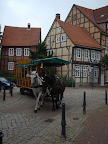
The next day we still had a fair distance to travel, so we chose to visit a city called Celle southeast of Hamburg. Its past historical significance (it was the regional capitol for a while) and the exceptional preservation of its downtown made it intriguing. And so it was. In a twisted way it was almost too well preserved, as it was vaguely reminiscent of Leavenworth, WA. The major differences are that the locals are German, it is bigger and older, and the currency is the Euro. It was a great lunclunch stop (Real Bratwurst!) and proved to us that Germany is almost cheap. And compared to Denmark (42% more expensive than the European average), food is nearly free.
Noteworthy site were some old houses, a palace (sorry no pictures) and a plaza where they used to hold jousting tournaments. Also of interest was the fragment of the medieval wall that remains in the city. Another fun time, and a good mid-day stop before reaching the World Heritage site of Lubeck in the evening.
I more or less at random chose a hotel (I recommend hotel.de for German Hotels) north of Frankfurt near the city of Kassel in an area called Knullwald. We exited the autobahn at the knullwald exit, and then asked in stilted German for the location of this hotel. Soon enough we figured out it was in another village up the hillside from our current location. Nice. The village of Schellbach is an old, small village with a very pleasant hotel. Not the super luxury type, but a nice place with a good restaurant boasting a very German menu. After the hectic weekend of travel, it was the quiet, nice, and peaceful location and evening that we all needed.
 |
| From Knullwald / Celle |
The next day we still had a fair distance to travel, so we chose to visit a city called Celle southeast of Hamburg. Its past historical significance (it was the regional capitol for a while) and the exceptional preservation of its downtown made it intriguing. And so it was. In a twisted way it was almost too well preserved, as it was vaguely reminiscent of Leavenworth, WA. The major differences are that the locals are German, it is bigger and older, and the currency is the Euro. It was a great lunclunch stop (Real Bratwurst!) and proved to us that Germany is almost cheap. And compared to Denmark (42% more expensive than the European average), food is nearly free.
 |
| From Knullwald / Celle |
Noteworthy site were some old houses, a palace (sorry no pictures) and a plaza where they used to hold jousting tournaments. Also of interest was the fragment of the medieval wall that remains in the city. Another fun time, and a good mid-day stop before reaching the World Heritage site of Lubeck in the evening.
Thursday, September 4, 2008
Maps of interest - Europe
Below is a map of places we have been In Europe. The orange lines are the roads we have taken, and the icons are points of interest. Clicking on an icon will bring more information. I will continue to update the map as I we go to new places. A link to it will be in the margin to the right.
Autobahn...
Last Saturday I packed the kids in the car on headed south to Germany to get Bev at the Frankfurt Airport. It was a fun trip, and we combined it with some good vacation time. We'll blog that later this week. But a driving trip into Germany must include information about the famed Autobahn. How to describe that experience? This is a good introduction...
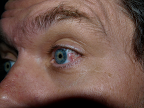
I would be in the right lane here. Our little rental car cruised nicely at 130 kph (80 mph), and we even hit 150 kph at one point. Fast enough for me, but nothing compared to the autobahn yahoos. The results:
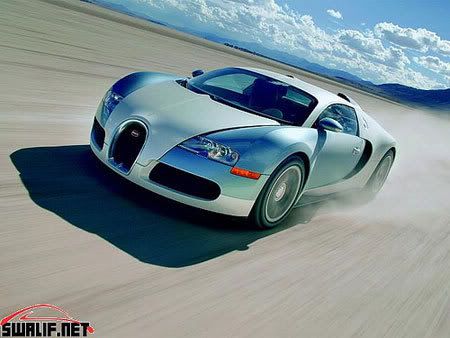
It was absolutely crazy. At one point the car shook when a Mercedes blasted by on the left. Time and again, some supercar came whipping by at 200+ kph (and likely much faster). Confirmed car types: Ferrari, Maserati, Mercedes, BMW, Audi, Bentley, Porchse, and others (including some low-slung thing that I have no idea what it was. Perhaps a Bugatti Veyron?
In summation, one should drive the autobahn if given the chance. It certainly leaves a lasting impression...
I would be in the right lane here. Our little rental car cruised nicely at 130 kph (80 mph), and we even hit 150 kph at one point. Fast enough for me, but nothing compared to the autobahn yahoos. The results:

 |
| From autobahn |
It was absolutely crazy. At one point the car shook when a Mercedes blasted by on the left. Time and again, some supercar came whipping by at 200+ kph (and likely much faster). Confirmed car types: Ferrari, Maserati, Mercedes, BMW, Audi, Bentley, Porchse, and others (including some low-slung thing that I have no idea what it was. Perhaps a Bugatti Veyron?
In summation, one should drive the autobahn if given the chance. It certainly leaves a lasting impression...
Wednesday, September 3, 2008
Skibhus Festival
The local school and the local activities clubs. have, for about a decade now put on a festival in our neighborhood. It is your basic school festival, with a few Danish twists.
The first difference is that the festival is an official school day. The teachers take attendance. As a result, everyone is there, and an easy way for the entire school community to interact. The second major difference is that only three of the nine grades are allowed to make money on their activities, but each class must either peform or provide some activity for the festival attendees. So all of the students are there providing for their community, and those that need to are generating funds for their school trips. Pretty cool.
Our kids had a great time running around, playing the games, and enjoying the beautiful day.
The first difference is that the festival is an official school day. The teachers take attendance. As a result, everyone is there, and an easy way for the entire school community to interact. The second major difference is that only three of the nine grades are allowed to make money on their activities, but each class must either peform or provide some activity for the festival attendees. So all of the students are there providing for their community, and those that need to are generating funds for their school trips. Pretty cool.
Our kids had a great time running around, playing the games, and enjoying the beautiful day.
Subscribe to:
Posts (Atom)